
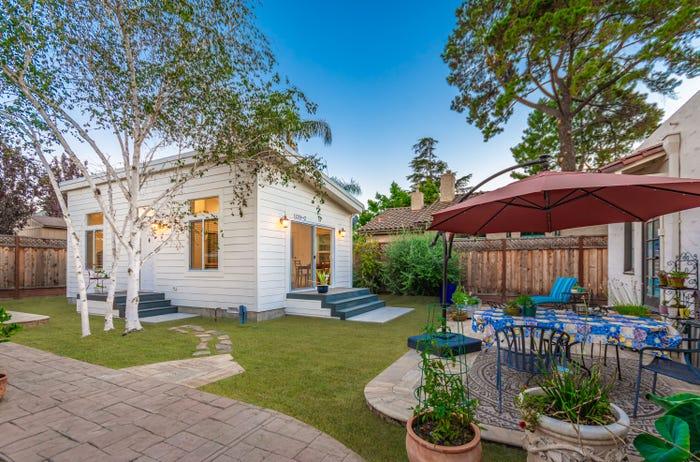

An Accessory Dwelling Unit (ADU) is a secondary housing unit built on the same property as a primary home. It functions as an independent living space with its own kitchen, bathroom, and entrance. ADUs are commonly used for rental income, housing family members, or creating flexible living space.
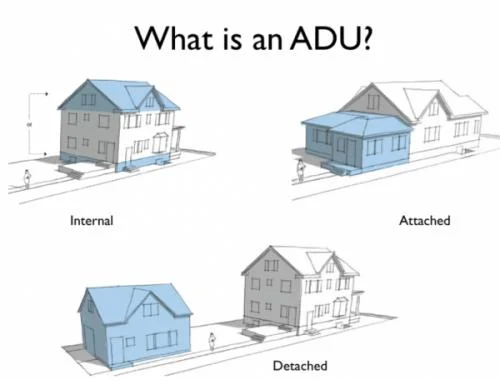
ADUs are also known as granny flats, in-law suites, casitas, or backyard homes. They are becoming a popular housing option because they allow homeowners to add living space without purchasing additional land.
Altering state and local laws could expedite and streamline the construction of ADUs, speeding their installation quicker.
Before building an ADU, there are several important factors you should consider.
Here are Some Key Considerations:
Can I Build One On My Property?
Before building an Accessory Dwelling Unit (ADU), it’s important to check local zoning laws and property regulations in your area. In cities like Las Vegas, ADU rules depend on factors such as lot size, property type, and zoning classification. Homeowners should always consult the local planning or building department to confirm whether an ADU is allowed on their property and what requirements must be met.
Rules regarding ADUs (accessory dwelling units) are evolving as state and local governments across the nation adopt regulations to facilitate more ADU construction to help address housing affordability concerns. California recently implemented legislation enabling people to buy or sell ADUs just like condos.
How Much Does It Cost To Build An ADU?
The cost of building an Accessory Dwelling Unit (ADU) depends on size, design, location, and materials. In general, ADU construction can range from $100,000 to $300,000+ in most U.S. markets, with detached units costing more than garage or basement conversions. Factors such as permits, labor, utilities, and finishes also impact the final cost in areas like Las Vegas.
Tips to Cut Down Construction Costs
Homeowners can reduce ADU construction costs by choosing pre-approved designs, converting existing spaces like garages, or using prefab ADU models. Avoiding fully custom builds and selecting standard materials can also significantly lower expenses. Planning ahead and working with experienced contractors helps prevent unexpected costs during construction.
How to Finance an ADU?
After knowing about what is an ADU, acquiring an ADU can be the biggest financial hurdle of all; but thanks to a new policy adopted by the Federal Housing Administration for FHA-backed loans, this process could become much simpler for some borrowers.
Under the new policy, homeowners who wish to build an ADU may apply for a rehabilitation loan known as 203(k), counting 50% of anticipated rent from that ADU as income in applying for said loan. Such an addition must either be built within or attached directly to their primary home to be considered income for this rehabilitation loan application process.
Homeowners who plan to build an attached ADU may qualify for an FHA loan by refinancing their home with 75% of anticipated rent from it; 75% counts towards qualification for this type of loan.
Peterson notes that many traditional lenders do not provide loans for ADU construction; when they do provide such financing options, however, they often require professional contractors be hired as laborers as well as higher interest rates and mortgage insurance premiums to be covered by them.
“Typically, people create an arrangement to pay for it using various means: refinancing to take advantage of home equity loans or selling investments; borrowing money from friends and family or placing part of it onto credit cards,” according to his analysis.
Some funding opportunities include:
- Existing savings
- 401K loan
- Cash-out refinancing
- Second mortgage
- Home Equity Line of Credit
- For construction loans
- Renovation loans
- Reverse mortgage
- Ground lease agreement
- Private money
- Shared appreciation or an equity agreement
- Explore alternative funds through local government or non-profits.
Who Can Build An ADU?
Before undertaking the DIY option of ADU construction, assess both your capabilities and expectations to take on such an endeavor. Though possible to act as your contractor, doing it successfully requires knowledge, time, coordination, and expertise – not something DIYers are always up for.
Development land requires careful attention to details you might overlook; such as construction permits, utility connections, and scheduling work at the appropriate cadence.
Most likely, professional services will likely handle some or all of these tasks for you:
- Design: Working with an architect and engineer, plans can be drawn up. If considering prefab or kit homes, always check with the local building department first to ensure it satisfies local codes (some cities such as Los Angeles offer pre-approved plans that you may use.)
- Construction: When hiring contractors for electrical or plumbing works, general contractors or individual subcontractors should act as conductors to oversee the entire project.
- Site Work: Water, power, sewer, and grading can all be required on any construction site. When hiring professionals for this work, get referrals from people familiar with them from people you trust before settling on any contractor or professional service provider.
For assistance on what questions to ask before hiring anyone, the Federal Trade Commission offers helpful guidelines as to what should be considered when looking at potential candidates for employment.
Recently, due to increased interest and development activity surrounding ADUs, companies have emerged that offer turnkey ADU solutions. Some offer their models, making the purchase cost less than building from scratch.
Purchasing a prefabricated or manufactured home that can be easily brought directly to your property? Before doing so, check with the city or county building department to make sure it satisfies local building code regulations. If you plan to convert an existing space into an individual dwelling unit, make sure that any contractors hired are licensed and insured.
Does An ADU Add Value To My Home?
Petersen points out that legally permitted ADUs tend to increase property value. Although ADUs won’t bring instant wealth-building opportunities, Petersen notes they can provide an effective means of building it gradually over time. Cities with high housing costs often find that rental income can quickly cover development expenses affordably and sustainably, offering homeowners future options for downsized living without needing to leave their own homes.
Some cities, like San Mateo in California, have developed ADU calculators to assist residents in assessing whether area rents will generate enough to cover monthly expenses.
Additionally,the landlord requires thoughtfulness about all its entanglements.
Pros And Cons Of ADU




Join The Discussion